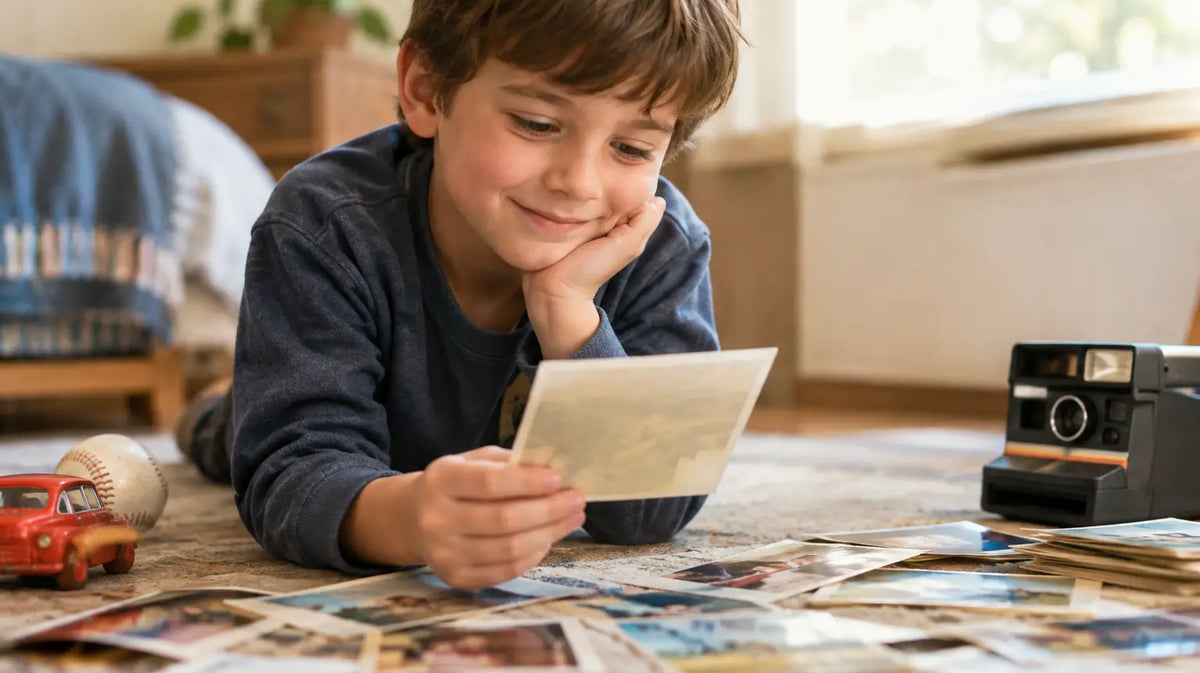
Why Nostalgia Apparel Trends Still Feel Personal
The kid who could program a VCR, survive a phone cord stretched across the kitchen, and get home before the streetlights came on is now buying groceries, answering work emails, and wondering why every password needs a special character. That is why nostalgia apparel trends hit differently for Gen X. They are not an attempt to dress like it is 1987. They are a way to wear proof that you were there.
A good throwback shirt does not need to explain itself. It lands like a private joke between people who remember cassette tapes in hot cars, Saturday morning cartoons, and the particular horror of hearing the dial-up modem connect. It says, "Yes, life got complicated. No, I did not forget how good a snow day felt."
Nostalgia apparel trends are about recognition
Fashion cycles have always borrowed from the past. What makes the current appetite for retro graphics, analog references, and old-school humor feel more lasting is that the people wearing it have purchasing power, perspective, and absolutely no interest in asking permission.
For Gen X, a vintage-looking tee is rarely about chasing youth. It is about recognition. It is the comfort of seeing an experience you thought was too ordinary to matter turned into something worth putting on a shirt. A landline. A mixtape. A video store. A school cancellation announced on television instead of through three apps and a text alert from the district.
Those details work because they are specific. Generic "retro vibes" may look fine on a mood board, but they do not carry much weight. A phrase about growing up analog and entering adulthood online does. So does a dry joke about being tired, grumpy, over-caffeinated, or having opinions shaped by decades of being told to figure it out. The best designs feel less like costumes and more like someone read your mental notes app.
That is also why humor matters. Gen X nostalgia has never been all soft-focus sentiment. We remember the fun stuff, sure, but we also remember rewinding tapes, printing directions, and waiting for photos to be developed only to discover a thumb in half the shots. A little sarcasm keeps nostalgia honest.
The difference between a memory and a costume
There is a fine line between wearing something that feels personal and looking like you lost a bet at an 80s theme party. The difference is usually restraint.
A wearable nostalgic graphic starts with a reference that still means something. It may use a familiar visual style, but it should not throw every neon squiggle, boombox, arcade cabinet, and lightning bolt onto one shirt just because it can. The goal is not to recreate a mall poster from 1986. The goal is to make a stranger in the coffee line nod and say, "Exactly."
It also helps when the message has a point of view. “I survived the 90s” is fine. “I survived the 90s and now I need reading glasses to find the remote” has a little more life in it. The reference meets the present moment. That is where the joke lives.
Color and fit matter, too. A bold graphic can still feel grown-up when it is printed on a soft, easy tee, a hoodie you actually wear on weekends, or a crewneck that works for school pickup, errands, and an aggressively casual Friday. Nostalgia should not require uncomfortable fabric, tiny sleeves, or a closet strategy. We have done enough hard things.
Why the familiar feels good right now
The past often looks extra appealing when the present is loud. Notifications stack up. Trends turn over before anyone has had time to wash the first version. Algorithms somehow know you need a new spatula but cannot understand that you do not want another video featuring a stranger yelling about productivity.
Analog childhood memories offer a useful contrast. They remind us of time that had edges. You called a friend, and if they were not home, you tried again later. You made plans and showed up. You listened to an album in order because skipping songs took effort. None of that was perfect, and nobody needs to pretend it was. But it felt tangible.
That tangibility is part of the appeal of graphic apparel. A shirt is physical. You choose it, wear it, wash it, and reach for it again. It can carry a tiny piece of cultural memory without demanding a speech, a social post, or a twelve-part documentary explaining why the 1990s were apparently a historical era now.
How to wear nostalgic graphics without trying too hard
The easiest rule is simple: wear the reference you genuinely like. If you loved snow days, old-school tech, dad jokes, music-store afternoons, or the highly questionable snacks of your childhood, start there. Personal beats popular every time.
Then let the graphic do one job. A funny tee pairs well with jeans, shorts, joggers, or whatever you already trust to get you through the day. A crewneck with a sharp line of text can carry a casual outfit on its own. A hat with a subtle reference is ideal when you want to signal your personality without turning your torso into a billboard.
There is no need to make every element vintage. A nostalgic shirt with modern sneakers and a clean jacket looks intentional, not like you are headed to a reunion tour. On the other hand, going full throwback can be fun when the occasion calls for it. Theme parties, concerts, family holidays, and group trips all have room for a little extra commitment. It depends on the setting and, more importantly, whether it makes you laugh.
Comfort should have the final vote. The shirt that stays in rotation is the one that fits your real life, not the one that photographs best for five minutes. A design can be clever, but if the material feels stiff or the cut feels fussy, it becomes closet decoration. Nobody needs more closet decoration.
Why nostalgia makes a better gift than generic funny stuff
A nostalgia-based gift says, “I know what makes you tick,” which is much better than saying, “I panic-bought this because it had words on it.” For birthdays, Father’s Day, holidays, or the friend who claims they do not need anything, a culturally specific graphic gives the gift some actual personality.
The trick is choosing the right lane. The person who still tells legendary stories about childhood winters may appreciate a snow-day design. The family pun champion deserves something that acknowledges the commitment. The coworker who remembers life before smartphones may enjoy a joke about analog survival skills. You are not buying an era. You are buying a reference that belongs to them.
That is why made-to-order apparel has its own appeal here. It feels less like anonymous novelty merchandise and more like a small, intentional pick. At Sun Ray’s Tees and Accessories, the point is not to save a funny design for a special occasion. Wear it to the hardware store. Wear it on a road trip. Wear it while explaining, for the thousandth time, why kids should learn how to read a paper map.
The throwback is not the whole point
Nostalgia has staying power because it gives people a shorthand for who they are and what they value. For Gen X, that shorthand often includes independence, humor, a healthy suspicion of hype, and a refusal to make everything precious.
The strongest nostalgia apparel trends do not ask you to move backward. They let you bring the good parts with you: the music, the weird little rituals, the before-everything-was-online resilience, and the ability to find a joke in the mess. Wear the shirt that gets it. The people who get it will get it immediately.
Read More
15 Best Sarcastic Gifts Adults Will Actually Use

Dad Apparel That Gets More Wear Than a Tie